


Signal vs. Noise: Three Ideas From This Week
Week of June 29 – July 2, 2026
You may have noticed some choppiness in markets recently — and if you’ve been watching your portfolio, you might be wondering what’s driving it. This week, we’re sharing three ideas that help put recent market behavior in context.
Why Stocks Move the Way They Do in the Short Run
One of our favorite frameworks for understanding market volatility comes from Benjamin Graham, Warren Buffett’s mentor and one of the most influential investors of the 20th century. Graham observed that in the short run, the market behaves like a voting machine; prices are driven by crowd sentiment, headlines, and emotion. In the long run, it acts like a weighing machine; ultimately rewarding businesses that consistently grow, generate cash, and deliver results.
This plays out in surprising ways. A company can report strong earnings and watch its stock fall because investor expectations had run too high. Another can miss its targets and rally because the crowd had already braced for something worse. Short-term prices reflect what people feel about a business. Long-term prices reflect what a business actually does.
The takeaway: short-term volatility is often noise. What matters over time is the quality and consistency of the underlying business.
Growth Stocks Have Had a Rough First Half, Here’s the Context:
If you hold a diversified portfolio, you’ve likely seen some underperformance from larger, well-known technology and growth-oriented companies this year. After several years of strong returns, this category has lagged in 2026 as investors have shifted toward different parts of the market.
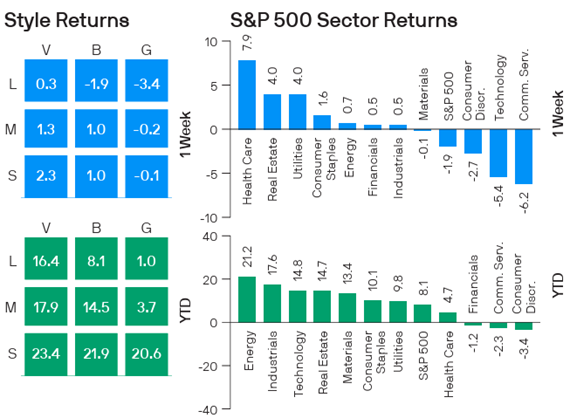
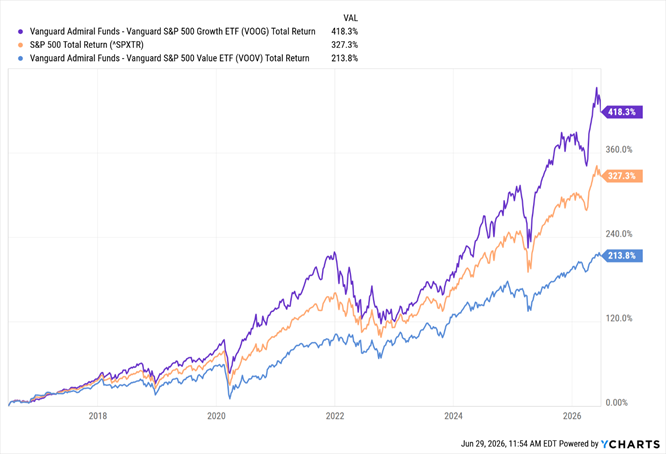
This is exactly the kind of moment the voting vs. weighing machine framework helps explain. The fundamentals of many of these businesses — their profitability, cash generation, and competitive advantages — haven’t changed. What’s changed is short-term investor sentiment. Historically, periods of uncomfortable underperformance in fundamentally strong companies have often looked, in hindsight, like attractive entry points. We’re not predicting a near-term rebound, but we do think the long-term case remains intact.
3. The U.S. Dollar: What It Means for Your Portfolio
The U.S. dollar doesn’t get as many headlines as inflation or interest rates, but its movements have a real impact on diversified portfolios — and it’s worth a brief update.
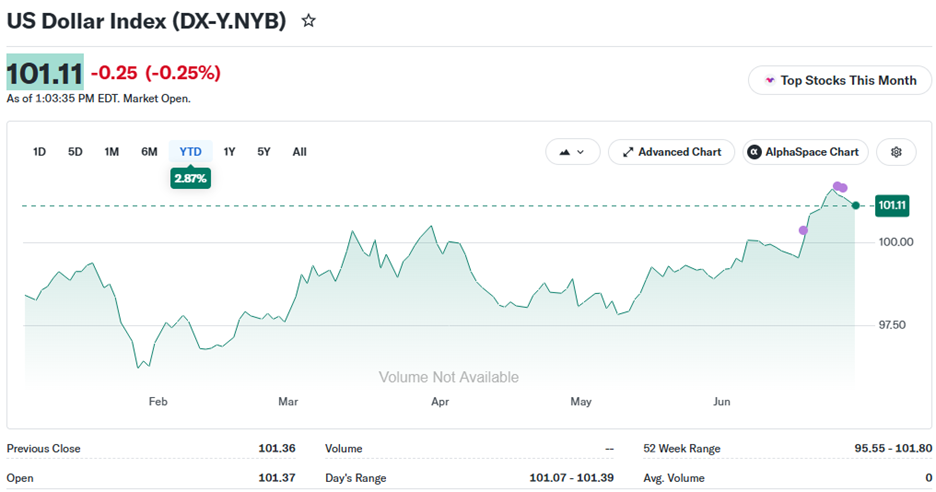
After weakening earlier this year, the dollar has stabilized and recovered somewhat. For your portfolio, here’s what that means in practical terms:
U.S. companies with significant international business (think large multinationals) earn revenue overseas, and a stronger dollar reduces the value of those earnings when brought back to the U.S. — a modest headwind for some growth-oriented companies.
International stocks and bonds tend to perform better relative to U.S. holdings when the dollar is weak, and less well when it strengthens. The tailwind that helped international markets outperform in 2025 has largely faded this year.
The net effect has been a more level playing field between U.S. and international investments in 2026 compared to last year — which is a normal part of how globally diversified portfolios behave over time.
As always, we’re here if you have questions about your portfolio or anything in this note. Volatility is an unavoidable part of investing and historically, staying the course through it has been rewarded.
Have a safe and Happy Fourth of July!
Morgan, Josh, and the entire team at PCWA