
Per Factset, Q2 earnings season has produced some eye-catching numbers. Blended earnings growth for the S&P 500 climbed to 47.4% as of July 31, up from 38.0% just a week earlier, which would be the strongest year-over-year growth the index has posted since 2021 if it holds. We touched on Alphabet’s outsized beat last week, driven mainly by its SpaceX stake soaring in value after the June IPO. This time around, Amazon’s beat due to a similar reason. Its EPS windfall included $53.4 billion in non-operating income tied to its stake in Anthropic, whose private valuation nearly tripled over the same stretch. Take both companies out of the picture and S&P 500 earnings growth comes in closer to 28.8%, still a strong quarter, just a somewhat different story than the headline number suggests.
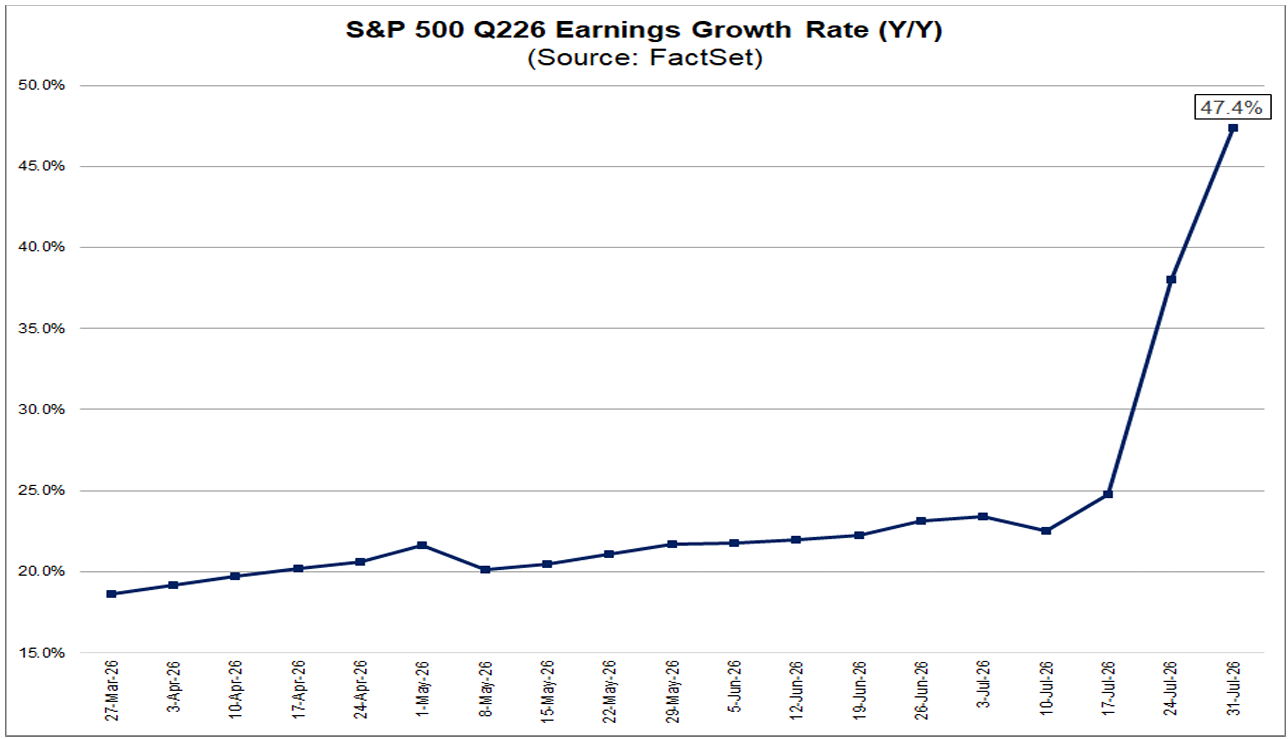 Even without Alphabet and Amazon, this would mark the seventh straight quarter of double-digit earnings growth, and sectors like Energy are having a genuinely good run, with earnings up 135% on higher oil prices.
A Hedge Fund, a Margin Call, and a Wedding
Leopold Aschenbrenner built the hedge fund darling, Situational Awareness, into a roughly $45 billion bet on the AI infrastructure trade, with meaningful leverage behind names like SK Hynix and CoreWeave. The trade had worked out incredibly well, until semiconductor stocks had a rough month and some of those same names fell significantly from recent highs. As other traders caught on, the fund reportedly faced margin calls from its prime brokers and ended up selling much of its public equity book to Citadel at a discount. By Aschenbrenner’s own account, the fund was down 67% for the month, though still up 80% for the year, and it isn’t shutting down. The timing added a human note to the story: all of this unfolded the same week as his wedding.
We are not saying whether the AI trade itself was right or wrong, but we do want to remind investors of the consequences of leverage, even if a thesis is sound. The reality is that markets can stay irrational longer than you may be able to stay solvent, so sizing trades, especially when using leverage is important. When you are winning, risk management doesn’t sound terribly exciting, but risk management should be woven into everything an asset manager does.
Warsh and the Fed Held Steady: Bond Markets Weren’t Happy
The Fed left rates unchanged at 3.50% to 3.75% at its July 29 meeting. On paper, another hold is about as uneventful as a Fed meeting gets. But stocks slipped during Warsh’s press conference, and Treasury yields moved higher across the curve anyway, with the 10-year rising to around 4.66% and the 30-year touching levels last seen in 2007 (see chart below). Yields kept drifting up into the next session as well. What seemed to catch investors’ attention wasn’t the decision so much as Warsh’s tone and guidance, or lack thereof.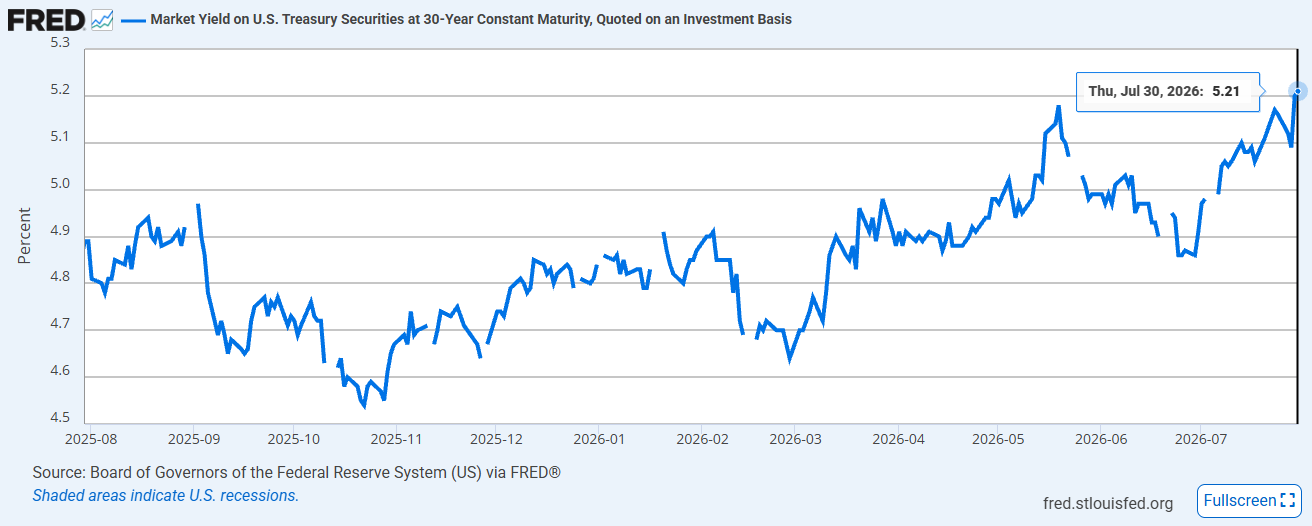 Markets are having to adjust to a shift in communication style from what they have become accustomed to, which is likely why yields moved the way they did. Rising long-end yields alongside a steady Fed funds rate is a symptom of uncertainty and inflation, rather than an expectation that the Fed will increase rates in the near term.
Morgan, Josh, and the entire team at Park City Wealth Advisors